
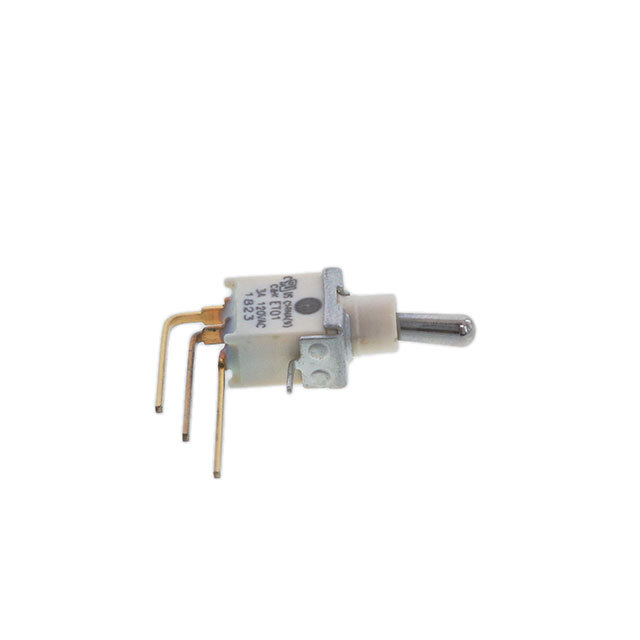
20 V AC/DC, 0.4VA, DPDT On-On, through-hole PC pins, -30°C to 85°C, IP57
Quick Engineering Summary
| Field | Value |
|---|---|
| Manufacturer | C&K Components |
| Category | Toggle Switches |
| Package | Tray |
| Core function | SWITCH TOGGLE DPDT 0. |
| Key electrical range | Current Rating (Amps): 0.4VA (AC/DC); Supply and Demand Status: Shortage; Temperature Range - Operating: -30°C ~ 85°C; Voltage Rating - AC: 20 V |
| Reported stock | 1 pcs reported — confirm on RFQ |
Can you start a new build on this switch?
Can you actually buy it again? That's the first question here.
E201MD1V3BE is listed Active, so lifecycle status does not block a new design. Supply does: listed stock is 1 and status is Shortage. That makes it workable for an existing line that already uses the panel cutout and PCB footprint, but a new program should not count on easy replenishment. EU RoHS is in place, so compliance is not the issue.
The load ceiling is the real limit
The numbers force a narrow use case: 0.4VA, with 20 V AC and 20 V DC as ceilings. Keep it to low-power signal routing and light control duties, not general-purpose power switching.
So the fit is narrow, but it is real
And that narrow fit is still useful. DPDT with an On-On function gives E201MD1V3BE a specific job: route two circuits between two steady states, not momentary user input and not load disconnect for anything that leans on the contact rating.
Through-hole mounting and PC pins point to board-mounted equipment, while the 7.62mm standard round actuator still marks it as a hand-operated panel control rather than a sealed membrane interface. IP57 and epoxy sealed terminals help where dust, splash, or washdown would punish an open-frame toggle, but they do not settle the mechanical side on their own. The bushing is unthreaded, so panel retention details matter more than they would on a threaded toggle.
20 V is what decides the design-in
20 V AC and 20 V DC decide this part fast. If your rail, fault case, or switched transient can exceed that ceiling, E201MD1V3BE is out before operator feel or sealing even enters the discussion. The same goes for the 0.4VA rating: it is the contact-load budget in the listing, and it keeps the switch in instrumentation, logic selection, and other low-energy jobs rather than anything that asks the contacts to break meaningful power.
The -30°C to 85°C operating range is useful, but it does not rescue a bad load match. It says the switch can live in ordinary indoor and light industrial temperature bands. It does not say how contact life shifts near the ends of that range, because no endurance data is listed.
Several release-level details are still missing. There is no panel cutout dimension, no drawing, and no pinout detail beyond PC Pin termination, so mechanical fit remains open. There is also no contact resistance, no electrical life, and no mechanical life. Those are the details that tell you how a toggle ages in service and whether field failures show up as intermittent contacts or loose panel hardware.
View the Win-Source product page for E201MD1V3BE.
Key Takeaways for Engineers & Buyers
- Keep E201MD1V3BE on signal-level rails only; 20 V AC and 20 V DC are hard ceilings.
- Match the load to the 0.4VA contact rating before release; that number closes off power switching fast.
- Place a supply hold now if E201MD1V3BE is already on the BOM; stock is 1 and status is Shortage.