
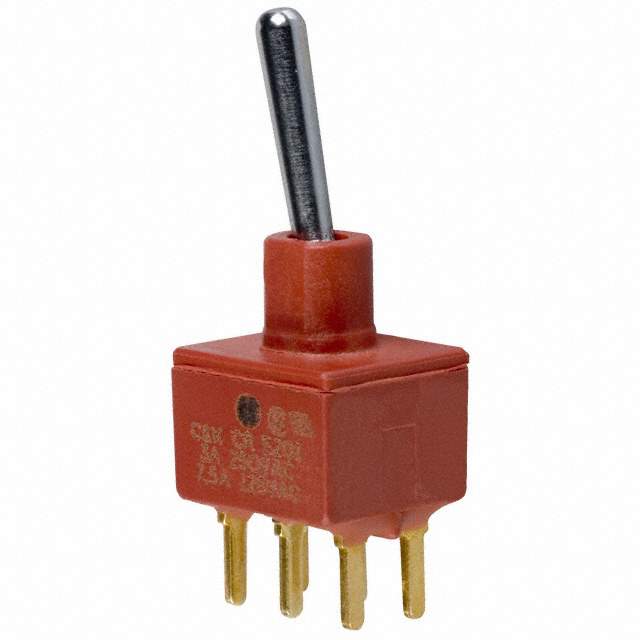
20 V AC/DC ceiling, 0.4VA contact limit, DPDT On-On, through-hole PC pins, -30°C to 85°C
Quick Engineering Summary
| Field | Value |
|---|---|
| Manufacturer | C&K Components |
| Category | Toggle Switches |
| Package | Tray |
| Core function | SWITCH TOGGLE DPDT 0. |
| Key electrical range | Current Rating (Amps): 0.4VA (AC/DC); Temperature Range - Operating: -30°C ~ 85°C; Voltage Rating - AC: 20 V; Voltage Rating - DC: 20 V |
| Reported stock | 1 pcs reported — confirm on RFQ |
0.4VA is the number that decides this switch
0.4VA sets the limit. It is the hard ceiling that defines where E201SD1CBE fits and where it does not.
The DPDT circuit and On-On function give you routing flexibility, but the listed 20 V AC and 20 V DC figures are still ceilings, not permission to use it as a power switch. They only describe the maximum rated voltage the contacts can see inside a very small contact-load envelope, and that distinction matters more than the toggle format does.
In practice, that pushes E201SD1CBE toward low-energy selection and signal-routing duties, not load switching where inrush, lamp loads, or motor edges punish contacts and shorten life fast. Get that wrong and contact wear will show up long before the quoted 40,000-cycle electrical life tells you anything useful. Through-hole mounting with PC pin termination keeps board integration simple, while IP57 and epoxy sealed terminals make it a better fit where dust, splash, or washdown would rule out an open-frame toggle. For a new design, though, lifecycle remains Unknown and listed stock is 1, so this lands as a sustaining part unless the exact mechanical format is already proven in the product.
The 20 V ceiling does less than the package does
So the 20 V AC and 20 V DC figures need a narrow reading. They settle the maximum rated voltage question, but they do not settle contact stress, arc behavior, or abuse margin, because the listing gives no inrush rating, no overload behavior, and no contact resistance trend over life.
Fit is clearer. E201SD1CBE is a through-hole, PC-pin, DPDT toggle with a standard round actuator and an unthreaded bushing, which places it in board-mounted human-interface hardware where panel stack and actuator reach are already known. The 12.70mm actuator length matters because it decides whether the lever clears the panel and feels right in the finished assembly. Non-illuminated is a real constraint too if the switch itself is expected to show state.
40,000 cycles is useful, but only in the right job
40,000 cycles is useful only after the load case is kept in bounds. Here, that electrical life belongs to a switch rated at 0.4VA, so it supports repeated low-energy actuation rather than broad durability under heavier loads.
The -30°C to 85°C range is an ambient ceiling, and it helps in outdoor cabinets or industrial interiors that would exclude a narrower commercial toggle. Still, this listing leaves real gaps: contact resistance, mechanical life, panel cutout or drawing, and terminal layout. Those are the missing items that block a clean release because they determine signal loss, front-panel fit, and PCB footprint.
Weak availability is the buying problem
The weak point is obvious: listed stock is 1. The better news is that packaging is tray with a standard package of 40, so if supply appears, it aligns with normal assembly handling rather than odd service packing.
Treat E201SD1CBE as a controlled buy for existing production or field support, not an open BOM choice. EU RoHS is compliant, MSL 1 is listed, and REACH is affected, so pull the material paperwork before release if your process screens substance declarations.
View the Win-Source product page for E201SD1CBE.
Key Takeaways for Engineers & Buyers
- Keep E201SD1CBE on low-energy signal paths only; the contact rating is 0.4VA at 20 V AC/DC.
- Match the panel hardware before release; E201SD1CBE uses an unthreaded bushing with a 12.70mm standard round actuator.
- Do not plan a line build around listed stock of 1; either secure the needed lot or hold this to service demand.