
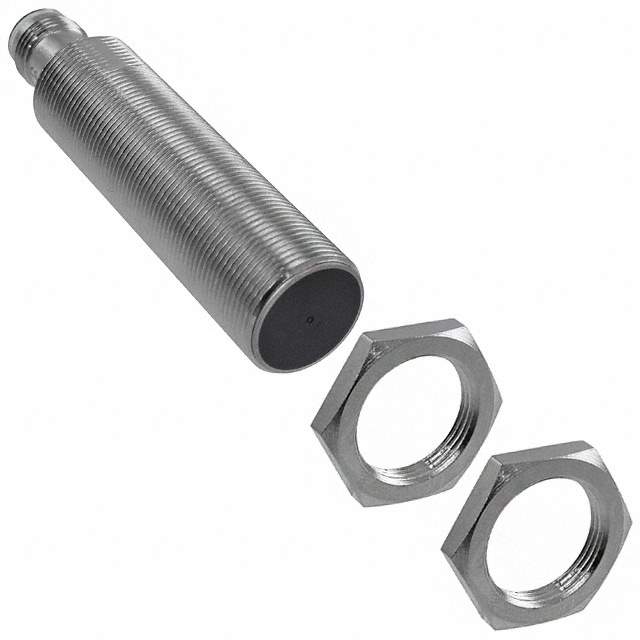
10 V to 32 V, 8 mm sensing, 500Hz, M18 threaded body, -40°C to 70°C, connector termination
Quick Engineering Summary
| Field | Value |
|---|---|
| Manufacturer | Omron |
| Category | Proximity Sensors |
| Package | Not listed for this part |
| Core function | SENSOR PROX INDUCTIVE 8MM CYLIND |
| Key electrical range | Output Type: PNP-NO, 3-Wire; Response Frequency: 500Hz; Supply and Demand Status: Balance; Supply Voltage - Operating: 10 V to 32 V |
| Reported stock | 1 pcs reported — confirm on RFQ |
Sustaining only, not a fresh design-in
Don't design this in.
E2A-M18LS08-M1-B1 is marked EOL, so the new-design decision is already made. Keep it to existing production that already depends on its 8 mm inductive sensing, PNP-NO 3-wire output, and M18 threaded mechanical fit. EU RoHS compliance helps if a running line still has to ship, but it does nothing to change the lifecycle risk.
The supply picture is tighter than the status line alone suggests. Stock is shown as 1, while another quantity field shows 0, which makes line-down risk immediate rather than theoretical.
Wrong for fast targets; fine for ordinary machine sensing
Fast targets are where this part falls short. The listed response frequency is 500Hz, so it belongs in ordinary position detection and presence sensing, not in applications where missed transitions turn into nuisance stops or bad counts.
It does fit straightforward industrial mounting. The body is a threaded M18 cylinder in nickel-plated brass, the termination is connectorized, and ingress protection is IP67 and IP69K. That combination suits dirty or washdown equipment, where the package and sealing matter as much as the sensing method. The 0.315" (8mm) sensing distance is the reach ceiling you can design around, but it does not answer target material effects, real-assembly clearances, or shielding behavior beyond the listing flagging it as shielded.
The real limits are rail span, temperature, and output style
The constraint is integration. A 10 V to 32 V operating supply range, a -40°C to 70°C operating temperature range, and a PNP-NO, 3-wire output will decide whether this sensor drops into an existing cabinet cleanly or forces rewiring, input changes, or an enclosure rethink, and those practical limits matter more here than the basic fact that it is an 8 mm inductive sensor.
Start with the rail. A 10 V to 32 V operating range covers common industrial DC rails, but it is still a boundary. If the machine rail moves outside that window even briefly, this listing offers no headroom story for what happens next.
Temperature is just as firm. The -40°C to 70°C operating range is the environmental ceiling and floor for E2A-M18LS08-M1-B1, and it will shape outdoor cabinets, hot enclosures, and washdown zones more than the sensing distance will. Get that wrong and the failure mode can look mechanical or intermittent long before anyone traces it back to the sensor.
Then there is output style. PNP-NO, 3-wire tells you what the input card has to expect in logic and wiring, but it does not tell you output current, voltage drop, or protection behavior. Those missing details are exactly what determine mixed-vendor PLC compatibility.
The missing details are the ones that close the review
1 unit is all that is shown, so treat E2A-M18LS08-M1-B1 as a stopgap for existing production only.
No pinout, no load current spec, and no switching protection or residual voltage data are shown.
View the Win-Source product page for E2A-M18LS08-M1-B1.
Key Takeaways for Engineers & Buyers
- Freeze E2A-M18LS08-M1-B1 to sustaining BOMs only; lifecycle is EOL.
- Check controller input compatibility with PNP-NO, 3-wire output before any last-time build.
- Confirm the machine can use an 8 mm inductive range and 500Hz response in an M18 threaded mount.