
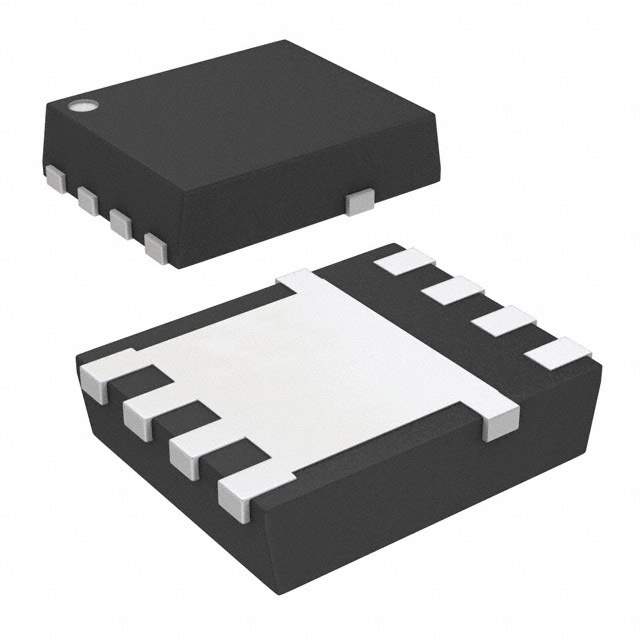
60 V reverse ceiling, 30A average rectified ceiling, 770 mV at 30 A, 8-PDFN (5x6), -55°C to 150°C junction
Quick Engineering Summary
| Field | Value |
|---|---|
| Manufacturer | Littelfuse Inc. |
| Category | Diodes, Rectifiers - Single |
| Package | Tape & Reel |
| Core function | DIODE SCHOTTKY 60V 30A 8PDFN |
| Key electrical range | Current - Average Rectified (Io): 30A; Current - Reverse Leakage @ Vr: 6 mA @ 60 V; Operating Temperature - Junction: -55°C ~ 150°C; Voltage - DC Reverse (Vr) (Max): 60 V |
| Reported stock | 1 pcs reported — confirm on RFQ |
Not for high-voltage rails; fine for low-voltage power paths
Wrong for anything above 60 V. That figure is a reverse ceiling, not a comfortable operating target, so designs that live near or above it lose margin fast and leave little room for line excursions.
It fits lower-voltage rectification and freewheel duty that can use a Schottky in an 8-PDFN (5x6) body. The 30A average rectified current is also a ceiling, not proof that every board can run there continuously; the package and the missing thermal numbers still decide whether the layout can support it. Lifecycle is Active, and RoHS is listed as EU RoHS.
Can you actually buy DST3060DJF for a build?
Can you get enough parts? That's the first question here. DST3060DJF is Active, but listed stock is 1 while the standard package is 3,000 and the package format is Tape & Reel.
For a bench build or qualification spin, that single unit may be useful. For production, it isn't. Lock the reel plan first, because the immediate risk is supply, not lifecycle status.
The numbers leave a thermal hole
Heat is the constraint. With 770 mV @ 30 A, conduction loss is plainly part of the budget, yet the listing omits thermal resistance, derating data, and a forward-drop curve across current and temperature.
What the listed limits decide in a real design
Start with exclusion.
The 60 V DC reverse rating is the hard reverse ceiling for DST3060DJF, so it tells you immediately whether the rail belongs in scope. It does not tell you how much transient abuse the diode can absorb, because no surge or IFSM figure is shown.
Then look at the pair that drives dissipation. The forward drop is listed as 770 mV @ 30 A, and that is the useful part of the entry because it ties the top current ceiling to a specific drop point rather than leaving current and loss disconnected. In practice, the thermal budget can become the real limiter before the nameplate current does, especially in an 8-PDFN (5x6) surface-mount body where copper and heat spreading do the heavy lifting.
Reverse leakage matters too. The stated point is 6 mA @ 60 V, again at the top reverse ceiling, which is relevant if reverse loss or hot standby current is sensitive. What it still doesn't answer is switching behavior. The speed field says fast recovery =< 500ns, > 200mA (Io), but that is not a reverse-recovery spec for DST3060DJF and should not be treated as one. For a Schottky, the missing dynamic data is what decides whether it behaves cleanly in a noisy converter or only looks acceptable in a static parts table.
The missing data is what closes the review
60 V is decisive, but it isn't enough. DST3060DJF still needs reverse-recovery time, junction capacitance, thermal resistance, and IFSM before switching stress, reverse charge behavior, and surge tolerance can be judged with confidence.
The pinout and package drawing are also absent from this page, and those are not clerical details on an 8-PDFN (5x6) power diode.
View the Win-Source product page for DST3060DJF.
Key Takeaways for Engineers & Buyers
- Hold reverse stress below the 60 V ceiling; this listing does not buy surge headroom.
- Budget conduction loss from 770 mV @ 30 A, not from the 30A rating alone.
- Plan reel demand early: standard package is 3,000 while listed stock is 1.