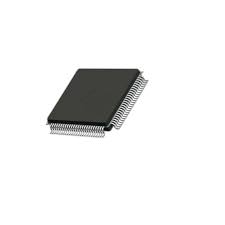
What Is HD6417034F20V?
The HD6417034F20V is a legacy Renesas / Hitachi microcontroller part commonly associated with the SH7034 family of 32-bit embedded microcomputers. It is mainly relevant today for engineers maintaining existing industrial, automotive, office equipment, and embedded control systems rather than for teams starting a new design from scratch.
For long-lifecycle equipment, parts like the HD6417034F20V still matter because the original system may depend on established firmware, fixed bus timing, existing PCB layouts, and validated control behavior. In these situations, replacing the device is not simply a matter of choosing a newer MCU with better specifications. The replacement must also preserve electrical compatibility, memory architecture, peripheral behavior, and software stability.
A key point is that engineers should verify the exact part number and physical marking before purchase or substitution. Renesas official SH7032 / SH7034 hardware manual lists HD6417034F20 as a ROMless, 5.0 V, 2 MHz to 20 MHz device in a 112-pin plastic QFP package. The same manual also distinguishes ROMless, PROM, and mask ROM versions under different prefixes and model numbers, which means memory configuration should not be assumed from family name alone.
Renesas currently lists the SH7034 product family as Not Recommended for New Designs, so HD6417034F20V should be treated as a legacy support component rather than a preferred MCU for new platforms.
What Are the Key Specifications of HD6417034F20V?
The HD6417034F20V should be evaluated against official documentation and physical device markings, especially when the part is being sourced from independent or excess inventory channels. Supplier listings may use suffixes or descriptions that require confirmation against the actual package marking, date code, voltage version, and memory type.
Parameter | Specification / Design Note |
Manufacturer | Renesas Electronics / former Hitachi Semiconductor |
Product family | SH7034 family |
Architecture | 32-bit embedded microcomputer architecture |
Official reference model | HD6417034F20 |
Memory type | ROMless version |
Operating voltage | 5.0 V version |
Operating frequency | 2 MHz to 20 MHz |
Standard temperature range | -20 C to +75 C |
Package | 112-pin plastic QFP |
External bus | External address/data bus for memory expansion |
Serial interface | 2-channel SCI |
A/D converter | 10-bit A/D converter with 8 analog input channels |
DMA | Direct memory access controller |
Timers | Integrated timer, watchdog timer, programmable timing functions |
Lifecycle position | Legacy / not recommended for new designs |
Renesas describes the SH7032 and SH7034 as microprocessors integrating peripheral functions needed for system configuration, including interrupt control, timers, serial communication interfaces, bus state control, DMA, and I/O ports. These functions explain why the family was widely used in embedded systems that required deterministic control and external memory support.
Why Does the Memory Configuration Matter?
Memory configuration is one of the most important details when evaluating HD6417034F20V.
Some legacy component listings describe the part as having integrated ROM and RAM, but the official Renesas product lineup identifies HD6417034F20 as a ROMless device. This means the application program is normally stored in external memory, and the board design must correctly support the external address/data bus, chip-select signals, memory timing, wait-state configuration, and boot behavior. Engineers should verify this point against the official Renesas hardware manual before approving any replacement.
This distinction is not academic. A ROMless device, a PROM version, and a mask ROM version may belong to the same broader SH7034 family, but they are not automatically interchangeable. If a maintenance team orders the wrong memory configuration, the device may fit the footprint but fail to operate in the target system.
For repair and replacement projects, engineers should therefore confirm:
- the exact model marking on the original device;
- whether the original system uses external program memory;
- the operating voltage and temperature grade;
- the package type and pin count;
- whether the replacement part has the same memory and boot behavior.
This is also where procurement and engineering need to work closely together. A part may appear available in the market, but it is only useful if its electrical configuration and lifecycle status match the original system requirements.
Where Is HD6417034F20V Commonly Used?
The HD6417034F20V is most likely to appear in mature embedded platforms where redesign costs are high and system behavior has already been validated over many years. Typical use cases include industrial control boards, motor control systems, PLC-related modules, office automation equipment, automotive electronic modules, and other products that rely on stable real-time control.
In industrial automation, the device may be found in control systems that depend on predictable interrupt response, external memory access, and established communication routines. In office equipment such as printers or scanners, it may support control logic, motor timing, sensor input, and system coordination. In automotive or transportation-related electronics, the key concern is not simply functionality, but whether the exact device version meets the required environmental, reliability, and qualification expectations.
Because this is a legacy MCU, the main reason to source HD6417034F20V today is usually continuity. Engineers may need to repair existing boards, support spare-part programs, maintain production for a legacy product, or keep a certified system unchanged while a redesign plan is prepared.
What Should Engineers Check Before Reusing HD6417034F20V?
Before approving HD6417034F20V for a repair, replacement, or limited production run, engineers should perform a system-level review instead of relying only on headline specifications.
The clock circuit should be checked first. Crystal frequency, load capacitance, external clock quality, startup behavior, and duty cycle all affect stable MCU operation. Reset timing is another critical area, especially in systems where power rails ramp slowly or external memory must be ready before code execution begins.
For ROMless designs, the external memory interface is especially important. Address/data bus routing, chip-select logic, wait states, external latch behavior, and memory access timing must all match the original design assumptions. Even a small difference in bus timing can create intermittent faults that are difficult to diagnose.
Power integrity also deserves attention. Multiple VCC and VSS pins should be properly decoupled, and analog supply pins such as AVCC, AVSS, and reference inputs should be handled correctly even if the A/D converter is not heavily used. Thermal behavior should be evaluated based on current consumption, ambient temperature, enclosure conditions, PCB copper area, and nearby heat sources. Rather than saying the device typically requires no heatsink, a more accurate engineering statement is that thermal management should be verified at board and system level against the operating environment.
Finally, teams should confirm whether legacy development tools, programmers, compilers, and firmware files are still available. In many legacy MCU projects, the technical risk is not the silicon alone – it is the full ecosystem around the original design.
What Are the Alternatives to HD6417034F20V?
There is no universal drop-in replacement for HD6417034F20V. The right option depends on whether the goal is immediate repair, controlled substitution, or long-term redesign.
Replacement Path | Best For | Main Consideration |
Same exact part number | Repair, spare parts, legacy production | Highest compatibility, but availability and authenticity must be verified |
Same SH7034-family ROMless variant | Controlled engineering substitution | Voltage, package, temperature grade, and marking must match |
SH7034 PROM or mask ROM variant | Specific redesign cases | Memory configuration and boot behavior differ |
SH7034B-family variant | Engineering-led migration | Electrical characteristics and voltage differences require review |
Modern Renesas RX / RA MCU | New design or major redesign | Requires firmware porting, PCB redesign, and revalidation |
Non-Renesas MCU | Full redesign only | No direct architectural or pin-level compatibility |
For immediate maintenance, sourcing the same verified part is usually the lowest-risk path. For long-term product continuity, however, engineering teams should assess whether continued dependence on a legacy MCU is sustainable.
Renesas defines NRND / Not Recommended for New Design products as devices that should not be adopted for new designs, either because they are mainly supplied for customers who have already adopted them or because EOL may be under consideration. This makes lifecycle planning essential. If the product still has several years of field support ahead, a redesign or migration plan should be considered alongside short-term sourcing.
How Can Buyers Source HD6417034F20V Safely?
Sourcing HD6417034F20V requires more caution than sourcing an active production MCU. Legacy parts are often found through independent distributors, excess inventory channels, brokers, and long-held stock. In these channels, the key question is not only whether the part is available, but whether it can be trusted.
Buyers should request clear documentation before committing to production quantities. This may include a Certificate of Conformance, traceability records, product photos, date code information, packaging condition, and storage history. For higher-risk applications, additional inspection or testing may be needed, such as visual inspection, X-ray, solderability testing, decapsulation, or electrical testing.
Counterfeit risk is higher for obsolete or difficult-to-source semiconductors because demand can remain active even after normal supply channels have weakened. AS6171 is a widely referenced standard for suspect/counterfeit electrical, electronic, and electromechanical parts; the SAE standard description notes that it standardizes inspection and test procedures, workmanship criteria, and minimum training and certification requirements for detecting suspect/counterfeit EEE parts.
A practical sourcing review should answer these questions:
- Does the supplier provide clear part marking and date code photos?
- Is the package consistent with the required 112-pin QFP version?
- Can the supplier provide traceability or prior ownership information?
- Has the part been stored in acceptable packaging conditions?
- Is testing available before shipment or before production use?
- Are there enough units from the same lot or date code for the project?
- Is there a backup plan if future replenishment becomes unavailable?
Legacy component procurement often requires availability checks, alternative part evaluation, documentation review, and quality verification before the part can be approved for use. For a legacy MCU such as HD6417034F20V, the distributor value should be reflected not only in availability, but also in traceability, quality control, and procurement decision support.
Is HD6417034F20V Suitable for New Designs?
In most cases, HD6417034F20V is not suitable for new designs. Renesas lists the SH7034 family as Not Recommended for New Designs, which means engineering teams should avoid adopting it for a new platform unless there is a very specific legacy compatibility reason.
For new products, modern MCU families generally offer better tool support, lower power consumption, stronger peripheral integration, improved security features, and clearer lifecycle visibility. They are also easier to support over the full life of a new product.
However, this does not mean HD6417034F20V has no value. Its value is in continuity. If a customer needs to maintain a mature system, repair an installed product, or support a controlled legacy build, sourcing the correct part may be faster and less risky than redesigning the full control board immediately.
Can HD6417034F20V Be Replaced Directly by a Modern MCU?
Not directly.
A modern MCU may offer higher performance and better integration, but it will not normally match the HD6417034F20V in pinout, bus timing, interrupt structure, peripheral mapping, firmware architecture, or external memory behavior. A migration project usually requires schematic redesign, PCB layout changes, firmware porting, toolchain updates, timing validation, and product requalification.
This is why buyers and engineers should separate two decisions: the short-term sourcing decision and the long-term migration decision. In the short term, the priority may be to secure authentic HD6417034F20V inventory for repair or production continuity. In the long term, the priority may be to reduce dependence on a legacy MCU and qualify a modern platform.
A balanced approach is often the most practical: source verified legacy inventory to protect immediate production needs, while preparing an engineering roadmap for future replacement.
FAQ
What is HD6417034F20V?
HD6417034F20V is a legacy Renesas / Hitachi microcontroller part commonly associated with the SH7034 family of 32-bit embedded microcomputers. It is mainly used in existing systems that require maintenance, repair, or controlled legacy production.
Is HD6417034F20V still recommended for new designs?
No. Renesas lists the SH7034 product family as Not Recommended for New Designs, so it should generally be avoided for new projects.
Does HD6417034F20V have on-chip ROM?
The official Renesas manual lists HD6417034F20 as a ROMless device. SH7034 PROM and mask ROM versions use different model numbers and should not be assumed to be interchangeable.
What package does HD6417034F20V use?
The official HD6417034F20 listing shows a 112-pin plastic QFP package. Buyers should verify the exact suffix, package marking, and package drawing before purchase.
What should buyers check before purchasing HD6417034F20V?
Buyers should confirm the exact part marking, voltage version, package type, temperature grade, date code, storage condition, traceability documentation, and testing options. For critical applications, additional inspection may be appropriate.
What are the alternatives to HD6417034F20V?
The safest short-term option is usually the same verified part number. Same-family variants may be possible only after engineering review. For new designs or long-term migration, modern MCU families such as Renesas RX or RA may be considered, but they are not direct drop-in replacements.
HD6417034F20V remains important for teams maintaining legacy systems built around the Renesas / Hitachi SH7034 family. Its role today is not as a preferred new-design MCU, but as a continuity component for established equipment where firmware, timing, board layout, and validation history still matter.
The most important step is accurate identification. Engineers should verify whether the required device is ROMless, confirm voltage and package details, review external memory and reset behavior, and evaluate thermal and power conditions at system level. Procurement teams should treat the part as a legacy semiconductor that requires documentation, traceability, supplier qualification, and quality verification.
For manufacturers supporting long-lifecycle products, working with an experienced electronic components distributor can reduce sourcing uncertainty and help balance immediate repair needs with long-term migration planning. In this context, WIN SOURCE can support component availability checks, legacy part sourcing, alternative evaluation, and application-oriented procurement decisions.
Editorial Source Links
The following official or standards-related sources were used for technical verification and external-link placement:
- Renesas SH7032 / SH7034 Hardware Manual
- Renesas SH7034 Product Page
- Renesas Supply Policy and Product Lifecycle
- SAE AS6171 Standard Description
- A2LA Counterfeit Part Avoidance Testing – AS6171
Written by Julian Carter
Julian Carter is an experienced technology writer specializing in electronic components, semiconductor devices, and embedded systems. With 10 years of hands-on industry insight, he transforms complex technical specifications into clear, practical perspectives for engineers, procurement professionals, and electronics manufacturers.
© 2026 Win Source Electronics. All rights reserved. This content is protected by copyright and may not be reproduced, distributed, transmitted, cached or otherwise used, except with the prior written permission of Win Source Electronics.