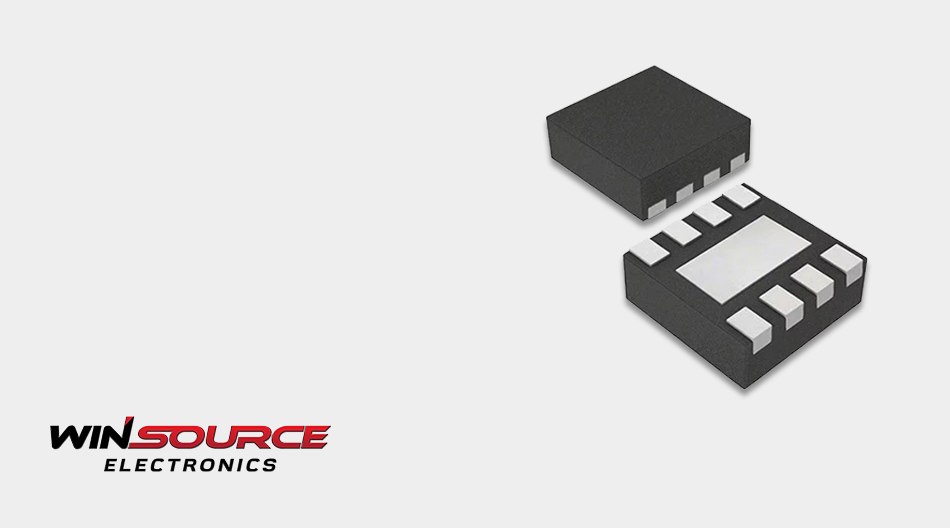
AD5780BCPZ is a high-precision digital-to-analog converter from the Analog Devices AD5780 series. It is suitable for systems that require high DC accuracy, strong linearity, and stable analog output performance. According to ADI’s official information, the AD5780 is defined as an 18-bit, ±1 LSB INL, voltage output DAC. It uses an unbuffered voltage output architecture and supports a bipolar supply of up to 33 V. Common application areas include test and measurement, industrial control, medical instrumentation, scientific instrumentation, and data acquisition systems.
1. Key Specifications: More Than Resolution
When reviewing the AD5780BCPZ datasheet, 18-bit resolution is usually the most noticeable specification, but it is not the only factor used to evaluate accuracy. For a precision DAC, INL, DNL, noise, gain error temperature coefficient, and long-term linearity stability are equally important. ADI’s official information shows that the AD5780 offers maximum specifications of ±1 LSB INL and ±1 LSB DNL, while also guaranteeing monotonicity. This means it can provide strong linear control capability in high-precision analog output systems.
Output noise is another important consideration in system selection. The AD5780 features an output noise spectral density of 8 nV/√Hz, a gain error temperature coefficient of ±0.018 ppm/°C, and a voltage output settling time of 2.5 µs. These parameters help determine whether the device is suitable for precision voltage sources, automated test equipment, closed-loop control systems, or calibration systems. From an engineering design perspective, resolution defines the theoretical step size, while linearity, noise, and temperature drift are more closely related to the effective accuracy that the system can ultimately achieve.
2. System Design: Reference, Power Supply, and Interface
AD5780BCPZ uses an external reference input structure. The positive reference input range is 5 V to VDD − 2.5 V, while the negative reference input range is VSS + 2.5 V to 0 V. The device also integrates precision reference buffers. For a high-precision DAC, the noise, temperature drift, and long-term stability of the reference source directly affect output accuracy. Therefore, when designing a bipolar precision voltage output channel, the reference source, analog power supply, grounding path, and output stage should be evaluated as a complete signal chain, rather than focusing only on the DAC itself.
Power supply design also has a direct impact on actual system accuracy. The AD5780 supports a wide supply range of up to ±16.5 V, making it suitable for precision analog channels that require a wider output range. In high-resolution applications, however, power supply noise, digital interface crosstalk, ground bounce, and layout coupling may all appear at the output. Power decoupling, analog and digital ground handling, reference path isolation, and sensitive node placement should be considered together during both schematic and PCB design.
On the digital interface side, the AD5780 uses a 3-wire serial interface with a maximum clock rate of 35 MHz. It is compatible with SPI, QSPI, MICROWIRE, and DSP interface standards, making it easier to connect with MCUs, FPGAs, or embedded control platforms. During design, engineers should pay attention to timing margin, logic level matching, digital trace length, and crosstalk control to prevent digital switching noise from coupling into the reference, analog power supply, or output path.
3. Selection Considerations: From Device to Signal Chain
AD5780BCPZ is better suited for systems that require high DC accuracy and stable analog output, rather than general low-cost analog output applications. If an application only requires a basic control voltage or low-resolution analog output, 18-bit accuracy may not deliver meaningful practical value. The performance advantages of AD5780BCPZ are easier to realize only when the reference source, operational amplifier, power supply, PCB layout, thermal design, and calibration strategy can all support the required level of precision.
System selection should also take output range, load conditions, noise budget, and long-term stability requirements into account. A high-precision DAC is often not the only component that determines overall system performance. The output amplifier, reference voltage source, power integrity, and board-level layout all influence the final output result. Therefore, when evaluating AD5780BCPZ, engineering teams should assess whether it matches the actual application target from the perspective of the complete analog signal chain.
Package type and operating environment should also be confirmed in advance. AD5780BCPZ is supplied in a 24-lead LFCSP package and operates over a temperature range of −40°C to +125°C. This allows it to cover the operating environment requirements of many industrial control, test and measurement, and instrumentation applications. For production projects, engineering teams should verify not only datasheet parameters, but also package version, temperature range, lifecycle status, alternative options, inventory availability, and lead time risks.
In real projects, component selection often requires a combined review of performance specifications, package version, supply cycle, and BOM consistency. WIN SOURCE can support engineering and procurement teams with component search, part number verification, and supply chain assistance, helping design validation and subsequent procurement execution stay better aligned.
© 2026 Win Source Electronics. All rights reserved. This content is protected by copyright and may not be reproduced, distributed, transmitted, cached or otherwise used, except with the prior written permission of Win Source Electronics.