* Question
What does sensor drift mean?
* Answer
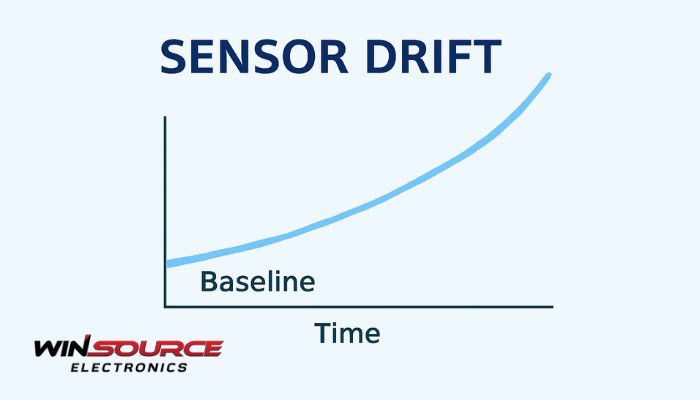
Sensor drift describes the gradual deviation of a sensor’s output from its true or calibrated value as time progresses. Even when the measured input remains constant, the sensor output may slowly shift due to internal or environmental factors. This phenomenon is common across many sensing technologies and is especially critical in long-term monitoring or high-precision applications, where even small deviations can accumulate into significant measurement errors.
The root causes of drift vary by sensor type but generally include temperature fluctuations, material aging, humidity, contamination, mechanical stress, and electrical noise. Thermal cycling can affect a sensor’s internal structure, while long-term aging changes the characteristics of sensing elements. Environmental exposure—such as moisture, dust, or vibration—can gradually distort the baseline output. Power supply instability or electromagnetic interference can also contribute to output shifts over extended periods.
Unchecked drift can erode system reliability, trigger false alarms, and compromise data accuracy. To maintain stable performance, engineers typically combine multiple mitigation strategies. Periodic recalibration realigns the sensor output with known reference values, while environmental control helps ensure stable operating conditions. Advanced systems may implement real-time compensation algorithms that detect baseline shifts and automatically correct them. Selecting sensor materials known for long-term stability and low drift is also an essential consideration in the design phase.
By understanding the mechanisms behind sensor drift and applying proper control measures, engineers can ensure consistent, reliable measurements throughout the sensor’s operational lifetime.