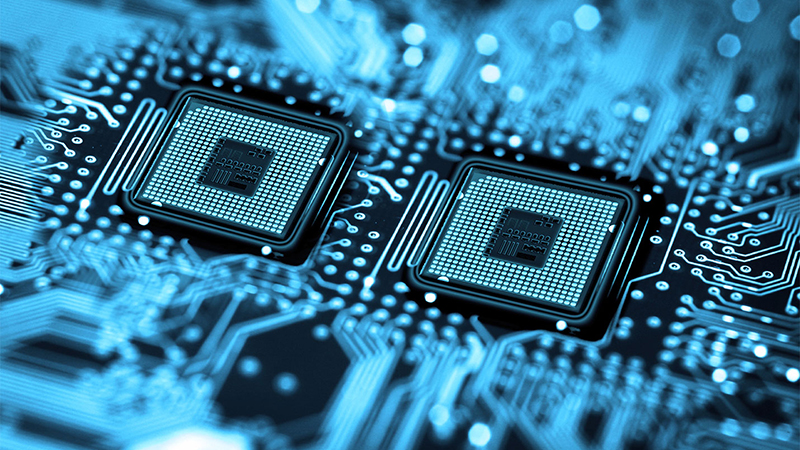
*Image from the internet; all rights belong to the original author, for reference only.
PCB Industry Supply Chain Disruptions and Price Surge: Challenges and Responses Driven by AI Compute Demand
The global electronics supply chain has been severely disrupted in recent years, with the rapid increase in AI computing demand playing a key role. The PCB industry, as a critical component in electronic devices, is facing significant challenges due to raw material shortages and rising prices. Copper foil, fiberglass, and resin prices have surged, increasing production costs and tightening the supply chain. This article explores the key disruptions, their impacts, and how manufacturers are responding.
Q1: Why is the PCB industry particularly impacted by supply chain disruptions?
AI’s growing demand for computing power has disrupted the global supply chain, particularly in the PCB industry. Raw materials like copper foil, fiberglass, and resin have seen sharp price increases, leading to higher PCB production costs. This has not only impacted AI servers but also other sectors, such as smartphones, automotive electronics, and consumer devices, all of which rely on advanced PCBs.
Q2: What factors are driving the rising prices of raw materials?
The rise in raw material prices is linked to several factors:
- Copper foil prices are directly influenced by global copper prices.
- Fiberglass costs are impacted by energy price fluctuations and local energy policies.
- Resin prices are closely tied to global oil prices, with increases pushing up production costs.
These factors combine to push PCB prices higher, affecting industries that rely on high-quality PCBs, such as telecommunications and automotive electronics.
Q3: Which manufacturers have announced price hikes, and by how much?
Several key manufacturers have raised their prices due to rising material costs:
- Mitsubishi Gas Chemical has increased prices by 30% for copper-clad laminates (CCL) and prepreg (PP) starting April 1, 2026.
- Resonac has raised prices by over 30% for copper-clad laminates (CCL) and adhesive films, effective from March 2026.
- Kingboard Laminates has announced a 10% increase for all laminates and prepreg (PP).
These hikes reflect rising raw material costs, which directly affect the PCB manufacturing sector, pushing up the overall cost of electronic products.
Q4: How are manufacturers responding to the price increases?
Manufacturers have adapted differently:
- Taiwanese manufacturers (e.g., Zhen Ding, Unimicron) expand capacity and leverage global sourcing to mitigate price pressures.
- Chinese manufacturers (e.g., Shenzhen South, Huada) rely on localized supply chains and flexible production scheduling to handle cost increases.
- Japanese manufacturers (e.g., Ibiden) focus on technological innovation and differentiated high-end products to maintain a competitive edge.
Each region uses its strengths to manage rising costs and ensure competitiveness in a tight market.
Q5: How is the demand for AI computing driving PCB growth?
AI technology, particularly AI servers, is significantly driving up demand for high-end PCBs. For example, a NVIDIA H200 GPU server requires 3-5 times more PCBs than traditional servers, and the value of each PCB increases 8-12 times. This surge in demand for AI accelerators leads to a sharp rise in the need for complex, multilayer PCBs, further pushing up production costs. This trend is seen not just in AI but also in quantum computing and high-performance computing applications.
Q6: Which sectors are most affected by the price surge?
Several industries are feeling the impact:
- AI Servers: Products like the NVIDIA H100 and H200 have seen increased PCB demand, leading to higher costs and longer production cycles.
- Consumer Electronics: Devices like foldable smartphones (e.g., Samsung Galaxy Z Fold) require high-end PCBs (rigid-flex and SLP), driving up costs.
- Automotive Electronics: The rise in electric vehicles and smart technologies has led to greater demand for automotive-grade PCBs, further driving up prices, especially for components like battery management systems (BMS).
Q7: Will advanced packaging technologies reduce reliance on traditional PCBs?
Advanced packaging technologies like CoWoS (Chip-on-Wafer-on-Substrate) are gradually reducing the need for traditional high-layer PCBs in some high-performance chips. However, traditional high-layer PCBs remain critical for mass production, especially in consumer electronics and automotive sectors, and will continue to be in high demand despite these technological shifts.
Conclusion: What does the future hold for the PCB industry?
The PCB industry is facing a combination of rising material costs, supply chain disruptions, and growing demand from sectors like AI. As manufacturers respond with innovative solutions, the industry will continue to evolve, adapting to these pressures. Ongoing technological advances and market adjustments will shape the future of PCBs, ensuring their continued importance in a rapidly changing electronic landscape.
© 2026 Win Source Electronics. All rights reserved. This content is protected by copyright and may not be reproduced, distributed, transmitted, cached or otherwise used, except with the prior written permission of Win Source Electronics.