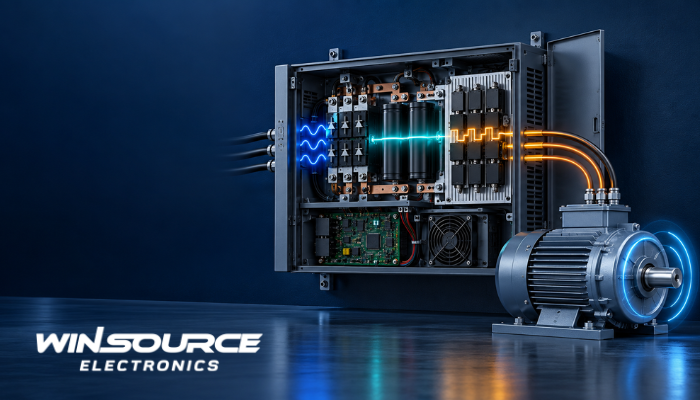
In industrial motor-control applications, ASD stands for Adjustable Speed Drive. It is an electronic system that controls the speed, torque, and sometimes direction of an electric motor by adjusting the power supplied to it.
For an AC motor, the ASD usually changes the output frequency and voltage. This type of equipment is also commonly called a variable-frequency drive (VFD) or variable-speed drive (VSD).
An ASD typically consists of:
A rectifier that converts AC input into DC
A DC-link circuit containing capacitors and sometimes inductors
An inverter that converts DC into variable-frequency AC
A controller that manages speed, acceleration, deceleration, and protection
Current, voltage, and temperature sensing circuits
A keypad, digital inputs, analog inputs, or communication interface
ASDs provide smooth motor starting, adjustable speed, reduced mechanical stress, process control, and potential energy savings. They are widely used with pumps, fans, conveyors, compressors, machine tools, and other industrial equipment.
Because ASD can have different meanings in other technical fields, its definition should be confirmed from the surrounding equipment or document context.