What Is a Magnetic-Circuit Variable-Reluctance Rotational Speed Sensor Made Of?
* Answer
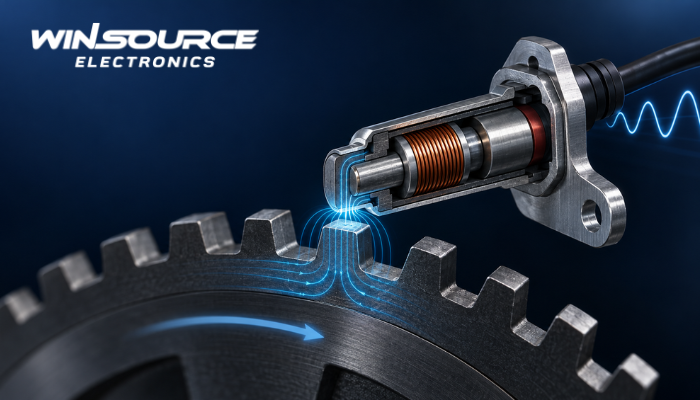
A magnetic-circuit variable-reluctance rotational speed sensor typically consists of:
A permanent magnet
A soft-iron pole piece or magnetic core
An induction coil wound around the core
A toothed ferromagnetic rotor, reluctor wheel, or gear
An air gap between the sensor tip and the rotating teeth
A protective housing, electrical terminals, and connecting cable
As the reluctor wheel rotates, its teeth and gaps move past the sensor tip. This changes the reluctance of the magnetic circuit and, consequently, the magnetic flux passing through the coil. The changing flux induces an alternating voltage in the coil.
The output frequency corresponds to rotational speed and the number of teeth on the reluctor wheel. Signal amplitude depends on factors such as speed, air-gap size, magnetic strength, coil design, and tooth geometry. Because the sensor generates its own signal, it normally does not require an external power supply, although its weak low-speed output may require signal-conditioning circuitry.