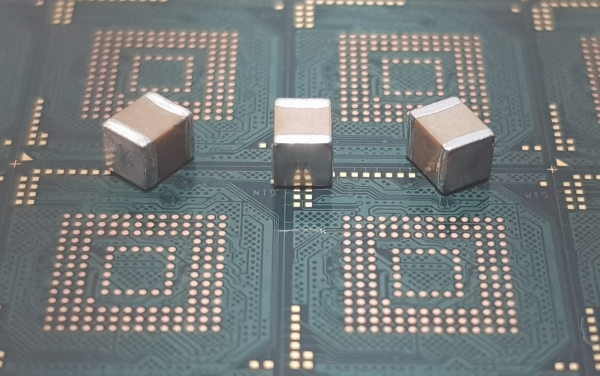
*Image from the internet; all rights belong to the original author, for reference only.
Which Electronic Component Price Increases Are Taking Effect in Q3 2026?
Quick Take
- Samsung Electro-Mechanics and Taiyo Yuden are the latest suppliers reported to be adjusting MLCC prices for shipments from August and September.
- Nichicon has introduced increases of 7%–15% for selected power-related products, while Qualcomm has confirmed that its product prices will rise.
- Each notice applies to different products, orders or shipment dates, so no single increase represents the entire component market.
In June, several semiconductor suppliers were reported to be preparing a second round of price adjustments. As Q3 2026 progresses, some of those measures have taken effect, while new notices have emerged for MLCCs, power-related capacitors and Qualcomm chips. The latest developments do not indicate a uniform market-wide increase. Instead, they show how pricing pressure is moving through specific product categories under different effective-date and order-handling rules.
Q1. What has changed since the Q2 price-increase notices?
The main change is that the market has moved from advance notices to actual implementation. Earlier reports covered planned adjustments from suppliers including STMicroelectronics and Infineon. Some of those changes became effective in late June or early July, although neither company publicly released a complete part-number list or universal percentage.
New developments have since expanded the picture. YAGEO was reported to have introduced broader capacitor pricing changes from July 1. Nichicon implemented clearly defined increases for selected power-related products from July 16. Samsung Electro-Mechanics and Taiyo Yuden were then reported to have issued MLCC notices for August and September shipments, while Qualcomm confirmed during its July 29 earnings call that its product prices would increase.
The trend has therefore extended beyond analog and power semiconductors into passive components and mobile processing platforms.
Q2. Which component price increases are already in effect?
Nichicon provides one of the clearest publicly available notices. Its official document states that new pricing applies to orders placed from July 16. Orders placed before that date are also subject to the revised prices if delivery takes place on or after October 1.
The affected products are power-related rather than Nichicon’s entire capacitor portfolio. High- and low-voltage power-factor correction capacitors and surge-absorption or grounding capacitors increased by 7%. Series reactors and discharge coils increased by 15%, while capacitor equipment, harmonic filters and automatic control equipment rose by 7%–15%.
YAGEO was also reported to have adjusted prices across a broad capacitor portfolio from July 1, including MLCCs, aluminum electrolytic capacitors, tantalum capacitors, film capacitors and supercapacitors. Reports cited increases of approximately 50%, but YAGEO has not published a public part-number-level table confirming that percentage across every product.
Q3. Which new price adjustments are scheduled for August and September?
Samsung Electro-Mechanics was reported to have notified sales partners that prices for relevant MLCC products would increase by 30% for shipments from August 1. TrendForce News described the scope as MLCC products under the company’s “Markup Business Code.” A public list of affected ordering codes has not been released, so the increase should not be interpreted as a confirmed 30% adjustment for every Samsung Electro-Mechanics MLCC worldwide.
Taiyo Yuden reportedly sent a customer letter on July 23 requesting an MLCC price adjustment for shipments from September 1. No uniform percentage was disclosed. The company was also reported to have warned that delivery schedules could remain difficult to guarantee even after the pricing adjustment.
Qualcomm represents a separate semiconductor development. Management confirmed during its July 29 earnings call that product prices would rise to offset higher memory, manufacturing and other input costs. Media reports based on a customer letter identified September 1 as the effective shipment date and described the increase as a double-digit percentage. Qualcomm has not publicly released a product-by-product pricing table.
Q4. Why have MLCCs become a central pricing issue?
MLCC pricing pressure reflects both stronger orders and changes in the type of capacity being used. According to market data cited by THE ELEC and TrendForce, the June book-to-bill ratios of Murata, Samsung Electro-Mechanics and Taiyo Yuden reached 1.30, 1.31 and 1.25, respectively. A ratio above 1 indicates that new orders are exceeding shipments and that order backlogs are expanding.
Demand is particularly strong for high-capacitance, high-reliability and heat-resistant MLCCs used in AI servers, high-performance computing and advanced power systems. Suppliers are consequently allocating more production resources to higher-specification X6S and X7R products.
This can also affect other market segments. When capacity moves away from some consumer-grade X5R products, availability of selected medium- and high-capacitance components may tighten. However, this does not establish a shortage across every capacitance, case size, voltage rating or dielectric class.
Q5. Do these notices mean that all electronic component prices are rising?
No. The current adjustments are selective and use different definitions of product scope.
Nichicon’s official notice applies to specified power-related equipment and components, not all of its PCB-level capacitors. Samsung Electro-Mechanics’ reported 30% increase applies to a defined business-code scope for which a public part-number list is unavailable. Taiyo Yuden has not disclosed a uniform percentage, while the exact Qualcomm increase may vary by product and customer agreement.
Prices can also behave differently across the supply chain. Factory orders may reflect new pricing while distributor inventory purchased at an earlier cost remains available temporarily. Open-market prices can move more quickly if buyers build inventory ahead of an effective date, but these quotations may also vary by date code, lot, packaging condition and traceability.
The evidence supports category-specific pricing pressure, not a universal increase across semiconductors and passive components.
Q6. What should buyers verify as the new pricing takes effect?
The first priority is to confirm the full manufacturer part number and whether it falls within the affected product scope. A supplier-level notice should not be applied automatically to every ordering code from that manufacturer.
Buyers should also determine whether the revised price is triggered by the purchase-order date, the supplier’s order-acceptance date or the shipment date. Nichicon’s notice demonstrates why this distinction matters: some orders placed before the effective order date still receive new pricing when delivery occurs after October 1.
Other points to verify include quotation validity, treatment of existing backlog, factory versus distributor inventory, applicable packaging and whether lead times are changing alongside prices. For MLCCs, comparisons should normalize case size, capacitance, voltage, tolerance, dielectric, temperature characteristics and qualification requirements. A lower-priced MLCC is not necessarily an approved replacement for the original component.
Conclusion
Q3 2026 marks a transition from earlier pricing warnings to implemented and scheduled adjustments across several component categories. The clearest developments involve selected Nichicon power-related products, reported MLCC changes from YAGEO, Samsung Electro-Mechanics and Taiyo Yuden, and Qualcomm’s confirmed plan to raise product prices. These actions do not prove that the entire component market is rising together. The next signals to monitor are actual part-level quotations, backlog treatment, distributor inventory and whether delivery conditions tighten after the new prices take effect.
© 2026 Win Source Electronics. All rights reserved. This content is protected by copyright and may not be reproduced, distributed, transmitted, cached or otherwise used, except with the prior written permission of Win Source Electronics.