In modern industrial systems, multi-node communication has become the norm. From production line control to distributed data acquisition and coordinated device operation, systems are increasingly required to deliver stable and scalable data transmission under complex electromagnetic environments. However, as the number of nodes increases, transmission distances extend, and interference intensifies, maintaining communication reliability and consistency becomes more challenging.
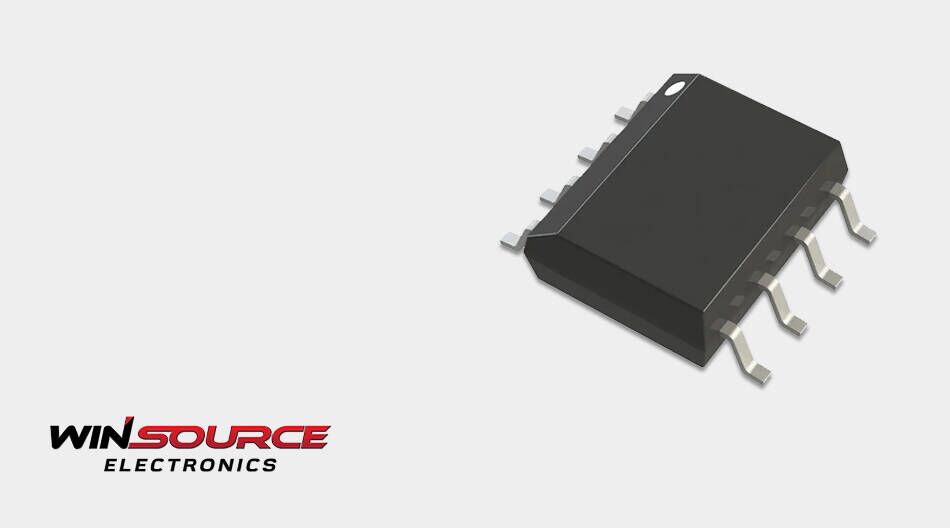
Against this backdrop, M-LVDS (Multipoint Low Voltage Differential Signaling) has gradually emerged as a viable solution for industrial communication. Devices such as the SN65MLVD201DR, as representative M-LVDS transceivers, provide a balanced approach to achieving transmission speed, noise immunity, and node scalability in multi-point network topologies.
1. Key Challenges in Multi-Node Communication: Load, Interference, and Topology Complexity
In typical industrial systems, multi-node communication is often implemented using a bus topology, where a central controller connects to multiple slave devices. While this architecture simplifies wiring, increasing the number of nodes significantly raises the bus load, leading to growing concerns around signal integrity. For instance, single-ended signaling is more susceptible to noise coupling over long distances, which can result in higher bit error rates.
Electromagnetic interference (EMI) in industrial environments is inherently complex, originating from sources such as motors, inverters, and switching power supplies. These high-frequency noise sources can directly affect the communication link. In a shared bus architecture, even a single node malfunction can propagate disturbances across the network, impacting overall system stability.
At the same time, multi-node systems impose stricter requirements on topology consistency. As node density increases, impedance matching, termination configuration, and signal reflection control become critical design considerations. Without systematic design constraints, issues such as signal distortion, edge degradation, and unstable communication are likely to occur.
2. Technical Advantages of SN65MLVD201DR: A Physical Layer Design for Multipoint Communication
The SN65MLVD201DR is designed based on the M-LVDS standard, with its primary advantage being native support for multi-node communication topologies while maintaining relatively high data transmission rates. Such devices allow multiple drivers and receivers to share a single differential bus, enabling true multipoint connectivity without the need for complex repeaters or switching architectures.
From a signaling perspective, differential transmission significantly enhances noise immunity. By transmitting complementary signals, the system effectively suppresses common-mode noise, which is particularly important in industrial environments. In addition, the low-voltage swing design helps reduce power consumption and electromagnetic emissions, making it suitable for high-density system integration.
In terms of load capability, the SN65MLVD201DR is optimized for multi-node applications, maintaining stable signal quality even when multiple nodes are connected. Its receiver design features well-defined input thresholds and strong noise margins, ensuring reliable communication even under challenging operating conditions.
3. System Design Practices: Key Considerations for Building a Stable Multi-Node Network
In practical applications, device selection is only the starting point; the upper limit of communication performance is largely determined by system-level design details, particularly in the following aspects:
- Bus Structure and Node Distribution
Bus design should aim for uniform node distribution while avoiding long stub traces. Excessive branch lengths can introduce signal reflections and propagation delays, which degrade overall communication stability—especially in multi-node systems where such effects accumulate.
- Differential Impedance and Signal Integrity
Controlling differential impedance is essential for maintaining communication quality. PCB routing should be designed around the target impedance (typically 100Ω differential), with proper termination resistors placed at both ends of the bus to suppress reflections. Additionally, differential pairs should be routed symmetrically, minimizing unnecessary bends and layer transitions to reduce signal distortion.
- Power Integrity and Noise Immunity
A stable power supply is fundamental to reliable transceiver operation. Decoupling capacitors should be placed as close as possible to the device to minimize the impact of power ripple on the communication link. In high-interference environments, common-mode chokes or ESD protection devices can be incorporated to further enhance system robustness.
- System Scalability and Architecture Planning
Multi-node communication systems often require future expansion. The multipoint capability of the SN65MLVD201DR allows flexible addition of nodes over time. Reserving expansion interfaces during the initial design phase, combined with a unified communication protocol, helps reduce future redesign costs while improving system maintainability and consistency.
As industrial communication continues to evolve toward higher reliability and increased node density, M-LVDS provides a balanced approach between performance and architectural simplicity. Devices such as the SN65MLVD201DR enable engineers to better manage trade-offs among data rate, noise immunity, and system complexity in multi-node designs.
In real-world projects, beyond technical selection, component availability and supply continuity remain critical considerations. Through distribution channels such as WIN SOURCE, engineering teams can more efficiently access key component information and streamline the transition from design to procurement.
© 2026 Win Source Electronics. All rights reserved. This content is protected by copyright and may not be reproduced, distributed, transmitted, cached or otherwise used, except with the prior written permission of Win Source Electronics.