Overview
The EPM3064ALC44-10 is a MAX 3000A series CPLD (Complex Programmable Logic Device) from Altera (now part of Intel), designed for high-speed logic control, interface bridging, and embedded digital systems. Based on an EEPROM architecture, it supports non-volatile configuration memory and can operate immediately upon power-up without requiring external configuration memory.
The EPM3064ALC44-10 integrates 64 macrocells, offering high-speed logic processing and low power consumption. It can be widely used in logic control and interface expansion in industrial control, communication equipment, consumer electronics, and embedded systems. Its compact package and mature, stable development ecosystem make it a classic CPLD solution.
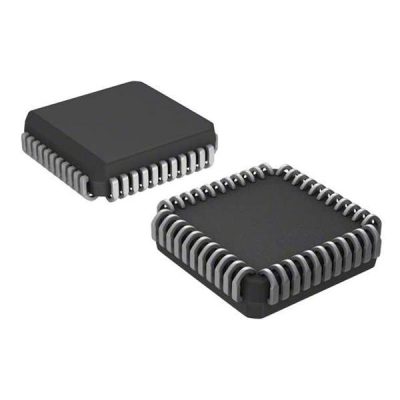
Core parameters
| Parameter | Value |
| Product Type | CPLD (Complex Programmable Logic Device) |
| series | MAX 3000A |
| Number of macrocells | 64 Macrocells |
| Operating voltage | 3.3V |
| Number of I/Os | Maximum 34 |
| Logical delay | Approximately 10 ns |
| Configuration method | EEPROM non-volatile |
| Power on start | Instant Start |
| Encapsulation type | PLCC-44 |
| Operating temperature range | 0°C to +70°C |
| Development Support | Quartus II |
| Environmental standards | RoHS compliant |
Features
Non-volatile EEPROM architecture
The EPM3064ALC44-10 uses EEPROM configuration technology, eliminating the need for external Flash or configuration ROM. It can run directly upon power-up, which helps simplify system design.
High-speed logic processing capability
The device features low propagation delay and fast logic response, making it suitable for high-speed control logic, state machine design, and interface conversion applications.
Flexible logical resources
It provides 64 macrocells and abundant I/O resources, enabling complex combinational logic, timing control, and interface management functions.
Low power design
The MAX 3000A series is optimized for low-power applications and is suitable for long-term stable operation in industrial control and embedded devices.
Mature and stable development environment
It supports Intel Quartus II development tools, facilitating logic design, debugging, and system integration, and shortening product development cycles.
Typical application scenarios
Industrial automation systems
Logic control, timing management, and interface expansion.
Communication equipment
Protocol conversion, interface bridging, and data control.
Embedded systems
MCU peripheral logic expansion and state machine control.
Consumer electronics products
Display control, power timing and signal management.
Test and Measurement Equipment
Digital logic control and signal routing management.
Comparative Advantage Analysis
| Performance indicators | EPM3064ALC44-10 | Ordinary FPGA |
| Power-on startup speed | Instant Start | Configuration required for loading |
| External configuration memory | No need | Usually required |
| Power consumption | Low | higher |
| Development complexity | Low | higher |
| Small logic control | excellent | generally |
| System cost | lower | higher |
The EPM3064ALC44-10 offers advantages over traditional FPGAs in terms of instant startup, low power consumption, and small-scale logic control applications.
Manufacturer Profile: Altera (Intel)
Altera (now Intel PSG) is a leading global supplier of programmable logic devices with a long history of technological expertise in FPGAs and CPLDs. Its MAX series CPLDs, known for their high stability, ease of development, and long-term market validation, are widely used in industrial and embedded systems.
Why choose EPM3064ALC44-10?
● EEPROM architecture, no external configuration memory required
● Instant power-on startup, improving system response speed
● 64 macrocells to meet complex logic design needs
● Low-power design suitable for industrial and embedded systems
● Supports Quartus II development environment
● Mature and stable CPLD solution
Frequently Asked Questions (FAQ)
Q1: What is the difference between EPM3064ALC44-10 and FPGA?
EPM3064ALC44-10 is a CPLD device, which features instant power-on startup, simple structure and low power consumption. It is more suitable for small-scale logic control and interface management, while FPGA is more suitable for complex large-scale logic operations.
Q2: Does this device require external configuration Flash?
No. The EPM3064ALC44-10 uses a non-volatile EEPROM architecture, and configuration data can be stored directly inside the chip, allowing it to run immediately upon power-up.
For more details and to explore our inventory, please visit the following link:
Product Details: Win Source – EPM3064ALC44-10
Price: Win Source – EPM3064ALC44-10
©2026 Win Source Electronics. All rights reserved. This content is protected by copyright and may not be reproduced, distributed, transmitted, cached or otherwise used, except with the prior written permission of Win Source Electronics.